


- You must see your primary doctor or cardiologist to be examined and get clearance for surgery.
- Pre-op testing must be completed. You will need to have the following tests: Chem 7, CBC, PT, PTT, EKG, Chest x-ray (age 45 and above, accepted up to 6 months prior to surgery).
- Avoid dental work, including cleanings, for four weeks before and after surgery.
- Avoid laser or chemical peel treatments for four weeks before surgery. Additionally, obtain clearance from Dr. Larian or Dr. Azizzadeh for any laser or chemical treatments after the surgery.
- Do not dye your hair for 4 weeks following surgery. Prior to surgery, you may dye your hair.
Parotid Surgery Guidelines
Four Weeks Prior & Four Weeks Following Surgery, The instructions should be followed closely as listed below
See How You Will Feel Just 24 Hours After Parotid Surgery
Two Weeks Prior & Two Weeks Following Surgery
- Avoid all products that may interfere with blood clotting. Examples: aspirin, ibuprofen, Aleve or aspirin-based products, NSAIDs (non-steroid anti-inflammatory drugs), vitamin E and supplements, garlic extract, alcohol (including wine and beer), herbal products, and fish oil.
- Avoid all smoking or nicotine products, including nicotine gum and patch.
- Contact your prescribing doctor for the management of medications during your surgical procedure and recovery. Please NOTIFY US OF ANY MEDICATIONS you are taking. This includes over-the-counter, non-prescription drugs. Tylenol (acetaminophen) is allowed before and after surgery for pain and/or fever.
- Discontinue all diet pills and GLP-1s (Ozempic, Mounjaro, Zepbound, etc.) 2 weeks prior to surgery.
- Avoid a diet that is rich in seafood.
Day/Night Before Surgery
- Wash face and shampoo hair.
- DO NOT eat or drink anything after midnight except as directed by doctor or staff.
- Fill and pick up all post-op prescriptions.
- Ensure that all travel companion arrangements are finalized for transportation to the surgery and pickup afterward. This companion should remain with you for 24 hours following surgery. YOU WILL NOT BE ALLOWED TO PROCEED WITH SURGERY UNLESS THESE ARRANGEMENTS ARE IN ORDER.
- By law, you are not permitted to leave the surgery center without your travel companion.
Day Of Surgery
- Take any pre-op medication as instructed by doctor or staff, only if pre-approved.
- If you’ve been instructed to take any medication, such as for high blood pressure or seizures, please do so with a sip of water.
- Remove contact lenses.
- Remove all jewelry and piercings.
- Leave valuables at home or with family members.
- Bring a form of ID, an insurance card if necessary, and a manner in which to pay for the surgery center, if applicable.
- Wear loose, comfortable clothing that is button-down or zippered so that it does not have to be pulled over your head (you will wake up with a dressing around the side of your head). Wear sensible shoes. Bring warm socks, as it may get cold in the surgery suite.
- Do not sign any papers, make appointments, or make important decisions for 24 hours after surgery. The post-op medications may alter your judgment.
After Surgery
Parotid Surgery is minimally invasive and recovery is quick
Because of our minimally invasive approach to parotid surgery, recovery is typically quick and easy. You should feel improvement every day after surgery. We have put together some post-parotidectomy care guidelines so you know what to expect following your surgery. However, keep in mind that every patient heals differently, so these are merely general guidelines.
Day of Surgery
- When you wake up from surgery, you will have a head dressing, and some patients will have a plastic drainage tube (usually when a muscle flap is necessary).
- You will spend at least an hour after the surgery recovering at the surgery center, and will then be discharged to go home with your companion or to an aftercare facility.
- It is important for the first 24 hours that you have someone you can count on to help take care of you.
- If you have a drain in place, the nurses will give you instructions on how to manage it. It is very simple and easy to take care of. The drain should be emptied at least twice a day and the amount recorded. This record should be shared with Dr. Larian daily.
Post-op Appointments
Dr. Larian prefers to directly stay in touch with his patients, and you will always have access to him.
Post-Op Appointment #1
Your first post-op appointment will be the day following your surgery. At this appointment, Dr. Larian and/or Dr. Azizzadeh will perform the first dressing change and teach you how to do it yourself. They will look at your incision and surgical area to make sure everything is healing properly. Dr. Larian encourages all his patients to go for walks twice daily for 15 minutes, as this will help the healing process.
Post-Op Appointment #2
Your second post-op appointment is generally 2-3 days following your surgery. At this appointment, if you have a drain, it will likely be removed. Once the fluid in the drain drops below 25cc over a 24-hour period, it’s usually ready to be removed. The process of removing the drain is quite simple and involves minimal discomfort, if any, since the tube is very small.
Post-Op Appointment #3
Your third post-operative appointment is typically scheduled 5 days after your surgery. During this appointment, we will thoroughly examine your incision and the surgical area to ensure that your healing is progressing as expected. After this appointment, you will have direct communication with Dr. Larian. He will provide you with specific instructions on how frequently you should send him pictures of the surgical area to monitor the healing process.
After the third post-op appointment (5 days after surgery), our out-of-town patients are ready to fly back home and get back to their normal lives. Since every patient heals differently, we always recommend our out-of-town patients purchase an open-ended plane ticket to be safe. Our number one priority is making sure you heal properly after your parotidectomy, and we have found that our hands-on post-op appointments with Dr. Larian ensure this success.
Post-Op Appointment #4
Your fourth appointment is usually a virtual video or phone call appointment. This is to make sure the healing process is going well, and answer any questions you may have. You always have access to your doctor and can call or text him directly thereafter.
At Home Care
Incision
- Before you touch your face or clean your incisions, please wash your hands with soap and warm water.
- Clean the incisions in front of the ear gently with a Q-tip and hydrogen peroxide only if there is any crusting.
- Antibiotic ointment (which will be provided for you) should be put on the incision twice a day for the first 7 days.
- As of the 8th day, please purchase BioCorneum (with SPF) and apply twice daily to the incision area only. Continue this routine for the next two months.
- After the first dressing change, ice packs will be provided to apply to the surgery area. They should be used for the next 24 hours on an hourly basis when awake.
- You might notice bruising, swelling, and hardness around your incision. This hardness will peak at about 3 weeks and will disappear over the next 2 to 3 months. Firm massaging of the scar starting 3 weeks after surgery will help make the skin and tissue around the area become softer over time.
Dressing
- The Velcro wrap should be worn with moderate pressure 24 hours a day for the first week. This will help minimize swelling and prevent fluid from building up under the skin.
- Keeping the wrap on during that first week is very important and will ensure you heal properly.
- The swelling in the area of surgery will increase the first several days. Swelling will last 2-3 weeks.
Sleeping
- Sleeping is crucial for healing. It can be challenging to sleep on the first night after surgery, but it becomes much easier by the next evening.
- Elevating your head helps reduce swelling, but sleep is far more crucial for healing. Therefore, please elevate your head to a comfortable level that allows you to sleep well.
- Sleeping on your back is the best position, but if you prefer sleeping on your side, that’s perfectly fine.
Additional At Home Care Instructions
- Once Dr. Larian feels you have healed well enough, he’ll let you know that it is appropriate to take a shower. For patients who don’t have a drain, that is usually 3 days after surgery. For those with a drain, it is the day after the drain has been removed. You may shower with lukewarm water. When drying off, delicately pat dry. Do not soak in a bathtub or spend a prolonged time in the shower.
- No heavy exercise or yoga for 3 weeks following surgery.
- Keep all incisions protected from sun exposure for 3 months following surgery.
Post-Operative Diet Suggestions
- DRINK PLENTY OF LIQUIDS: Please drink as much water as possible, in addition to other liquids, such as Gatorade. Avoid sodas and caffeinated drink for the first couple days. AVOID SPICY OR SOUR FOODS OR LIQUIDS (INCLUDING CITRUSES) FOR 2 WEEKS AFTER SURGERY; these types of foods/liquids cause a surge of saliva to be produced and may cause saliva to accumulate in the area of surgery.
- Good, nutritious food on the first 2-3 days are very important in the healing process and will help you feel stronger sooner. Start with soft foods. Here are some soft food suggestions: mashed potatoes, warm soups, cooked/boiled vegetables, canned fruit, oatmeal, cream of wheat, baby food, yogurt, bananas, apple sauce, JELLO, pudding, fruit smoothies.
- NO SMOKING
- NO ALCOHOL
- NO diet foods. NO diet drinks. Your body needs the calories for proper healing.
- NO aspirin or aspirin based products (see attached list).
- NO salty or spicy foods.
- NO greasy food.
- NO hot temperature foods (warm is preferred) as it may cause bleeding.
- NO heavy or big meals. Start small and light, then slowly increase as tolerated.
If you have questions relating to your surgery outside of our regular office hours, please call us directly at (310) 461-0300.
Suggestions to Minimize Swelling, Bruising & Scarring
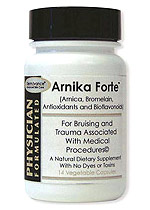
Arnika Forte is our preferred treatment for swelling and bruising
It is the only combined Arnica Montana and Bromelain capsule on the market and can only be purchased from a physician. Treatment starts the morning of surgery/treatment and continues for 6 days after: take 2 tablets at a time each day, for a total of 7 days until all capsules are completed.
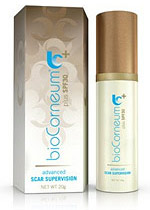
BioCorneum (BC+), a self-adhering silicone gel with SPF 30
Will provide the best environment for a scar to heal and will help speed up the healing process. Three days after suture removal, start applying BC+ twice a day, very sparingly, to your scar for 12 weeks, or until you stop seeing noticeable results. One drop is enough to cover a 3-inch scar. If you tend to form hypertrophic or keloid scars, you may want to use it for 6 months to a year. BC+ should dry right away and within a few minutes form a slick surface over your scar. BC+ will gradually wear off throughout the day, which is why you have to reapply it again at night to make sure you are getting a solid 24-hour per day exposure to the silicone.
Aspirin Containing Compounds & Medications
***IMPORTANT INSTRUCTIONS***
Aspirin and aspirin-related drugs (including arthritis and cold medications) cause prolonged and excessive bleeding in normal individuals during surgery. Therefore, you must not take these products for 2 weeks before and 2 weeks after your surgery. The following is a partial list of medications containing Aspirin that are to be avoided:
- A.P.C.
- Advil
- Aleve
- Alka-Seltzer
- Anacin
- Anaprox
- Arthritis Pain Formula
- Ascodeen-30
- Ascriptin
- Aspirin Suppositories (all brands)
- Aspirin
- Bayer Aspirin
- Buff-a-Comp
- Buffadyne
- Bufferin
- Butalbital
- Carna Arthritis Pain Reliever
- Carna-Inlay Tabs
- Cheracol Capsules
- Congespirin
- Cope Coricidin
- Coricidin
- Darvon Compound
- Dristan
- Doan’s Pills
- Duragesic
- Ecotrin
- Empirin
- Emprazil
- Equagesic
- Excedrin
- Fiorinol
- Four-Way Cold Tablets
- Indocin
- Measurin
- Midol
- Monacet with Codeine
- Motrin
- Naprosyn
- Norgesic
- Nuprin
- Os-Cal-Gone
- Pamprin
- Pamprin (Buffered)
- Panalgesic
- Pepto-Bismol
- Percodan
- Persistin
- Propoxyphene
- Robaxisal
- Sine-Off
- Stendin
- Stero-Darvon with A.S.A.
- Supac
- Synalgos
- Synalgos-DC
- Tolectin
- Traminicin
- Vanquish
- Voltaren
*IBUPROFEN IS ALSO KNOWN TO CAUSE PROLONGED BLEEDING & SHOULD BE AVOIDED*
If you must take something for relief of headache, menstrual cramps, backache, etc., please take TYLENOL (as directed) for the 2 weeks before and 2 weeks after your surgery. Tylenol should not be combined with prescription pain medications.
PLEASE CHECK ALL MEDICATIONS YOU ARE TAKING FOR ASPIRIN CONTENT. If you are taking a medication not listed above, you may call the office to check the Aspirin/Ibuprofen content, or you can contact your pharmacist.
All herbal medicines, vitamins, and dietary/nutritional supplements need to be stopped 2 weeks prior to surgery by weaning over 3 days.